
Fire, Life & Safety Inspections in Thousand Oaks, CA
If you manage a building in Thousand Oaks, your fire protection systems are not on one schedule. They are on six. Weekly, monthly, quarterly, semi-annual, annual and five-year items all run at once, across sprinklers, pumps, standpipes, hydrants, valves, alarms, emergency lighting and fire doors.
Hyperion Fire carries out that inspection and testing work across Thousand Oaks and the Conejo Valley, documents every deficiency found, and prices the corrective work separately so you can see what the inspection found and what fixing it costs.
Based at 275 E Hillcrest Dr Ste 160-136, Thousand Oaks. The inspection work is run by an owner with more than 35 years in fire life safety, including inspection, assessment and repair on residential, commercial and industrial systems.
Send the most recent inspection report for the property and you will get a quote built on your actual system rather than a square footage estimate.
Why Thousand Oaks Buildings Carry Heavier Inspection Schedules Than Most
Thousand Oaks is not a warehouse town, and the inspection work here does not look like the inspection work in one.
The property base in this city is weighted towards the occupancies that carry the most demanding recurring obligations: care facilities, assisted living and retirement communities, schools, medical and institutional buildings, corporate and business park campuses, and retail. Those are buildings where people sleep, where people cannot self-evacuate quickly, or where the building runs continuously and cannot be taken offline for the convenience of a testing schedule.
Three things follow from that, and they shape every inspection this business does in Thousand Oaks:
The schedules stack. A care facility or a school is rarely on one frequency. Sprinklers, a fire pump, standpipes, alarm devices, emergency lighting and rated door assemblies each run on their own cycle, and the annual items are the ones people remember while the weekly and monthly items quietly lapse.
The work has to happen around occupancy. Testing cannot wait for a building to empty out, because these buildings do not empty out. Flow tests, alarm testing and system isolations get scheduled around residents, patients, students and staff rather than around the contractor's calendar.
Water-based readiness matters more here. The Conejo Valley sits in and alongside terrain designated at the highest wildfire hazard severity in California. A sprinkler system, a fire pump and a hydrant that have not been properly tested are a different kind of exposure in this city than they are on the coastal plain.
Fire Code Compliance for Thousand Oaks Properties
Fire prevention and inspection in Thousand Oaks is administered by the Ventura County Fire Protection District, which provides fire services to the City of Thousand Oaks.
For most commercial, industrial, multi-residential and institutional properties in the city, the recurring obligations usually include:
Inspection, testing and maintenance of water-based fire protection systems to NFPA 25. Sprinkler systems, standpipes, fire pumps, hydrants and valves each sit on their own frequency within that standard, which is why a single property is never on a single schedule.
Five-year certification of automatic fire extinguishing systems under California Code of Regulations Title 19, which is the inspection most owners know simply as "the five-year".
Annual inspection and testing of the fire alarm system to NFPA 72, with the scope varying depending on how many and what type of devices are installed.
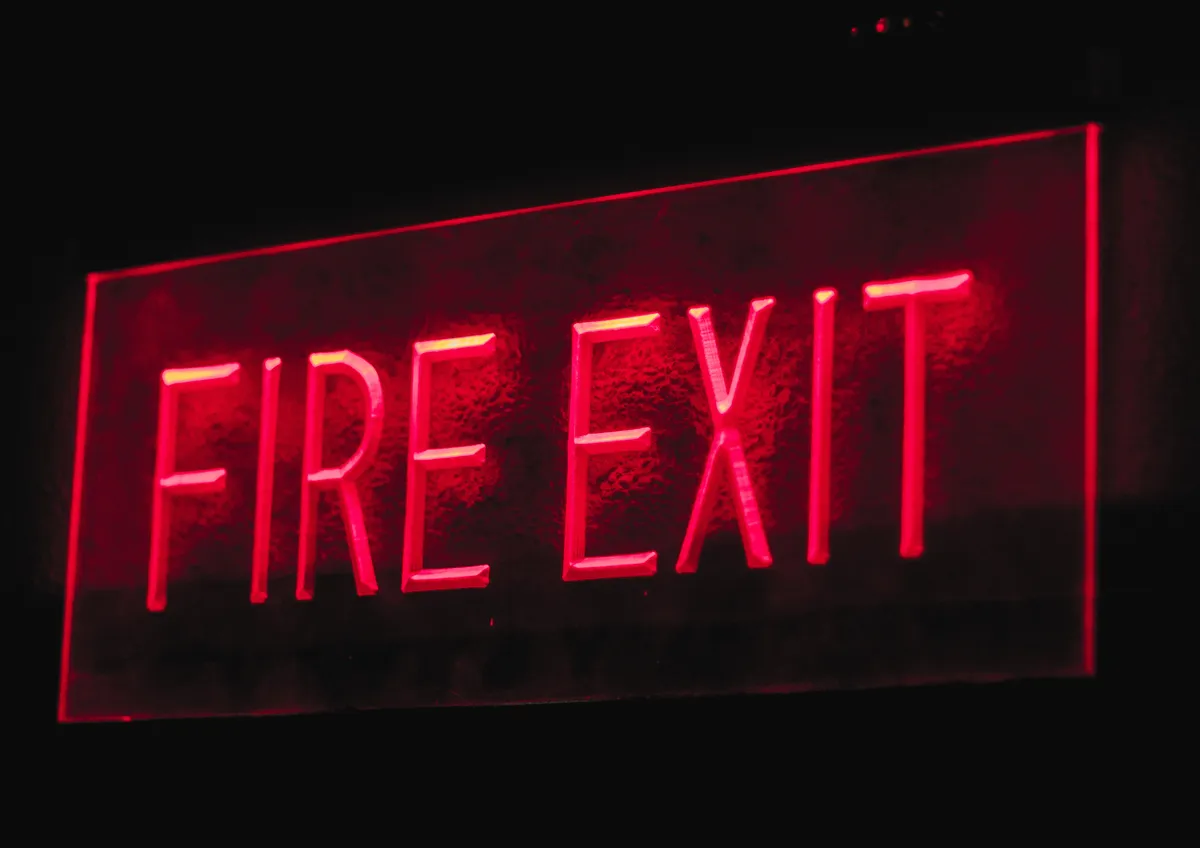
Monthly and annual testing of emergency lighting and illuminated exit signage, including the annual full-duration discharge test.
Annual inspection of fire door assemblies to NFPA 80, an item that is frequently missed entirely until an inspector asks for the records.
Records kept and available. Inspection and testing documentation needs to exist, be current, and be produceable when it is asked for.
LAFD Regulation 4 testing and certification for any property in the portfolio located inside the City of Los Angeles.
Exact requirements vary by building, system, occupancy and jurisdiction. The Conejo Valley also carries wildfire exposure that raises the stakes on water-based system readiness in a way that flatter, denser parts of Southern California do not. You will be told what applies to your specific property rather than handed a generic checklist.
Full Inspection and Testing Services in Thousand Oaks
Fire sprinkler inspection, quarterly and annual
Quarterly and annual inspection of sprinkler systems, covering the components each frequency calls for, with findings documented against the system as installed.
Five-year sprinkler system inspection
The five-year internal inspection and certification work under Title 19. This is the inspection owners most often call about first, and it is the one where sending the previous report makes the largest difference to the quote, because the scope depends entirely on what is installed and what the last cycle found
Fire pump inspection and flow testing
Weekly fire pump inspection, and annual flow testing of diesel and electric fire pumps. Flow tests need water disposal, access and timing planned around the building, which is why they are scheduled rather than squeezed in.
Standpipe system inspection
Class 1, Class 2 and combined standpipe and sprinkler systems. Common in Thousand Oaks on multi-storey office, mixed-use and institutional buildings, and one of the areas where older systems and current requirements most often diverge.
Fire hydrant testing
Annual testing of private fire hydrants on the property, including flow and condition.
PIV service
Weekly or monthly post indicator valve service, depending on the requirement applying to the property. A small recurring item that causes a disproportionate number of deficiencies when it lapses.
Fire alarm system inspection
Annual fire alarm inspection, with scope varying based on the number and type of devices installed. Panel, initiating devices, notification appliances and supervisory functions are tested and the results documented.
Emergency lighting
Testing of emergency lighting units and illuminated exit signage, including full-duration testing.
Fire door assembly testing
Annual fire door assembly inspection and testing to NFPA 80. Rated door assemblies are part of the fire protection system, and they are the item most often absent from an otherwise complete compliance file.
Los Angeles REG 4 inspections
Regulation 4 inspection work for properties inside the City of Los Angeles, run on the same schedule and the same reporting as the Ventura County side of your portfolio.
The Report You Receive
The inspection is not the deliverable. The report is.
Each inspection produces written documentation of what was tested, what passed, and what was found deficient, written to go straight into your compliance file. Where deficiencies are found, the corrective work is quoted separately rather than folded into a single number, so you can see what the inspection found, what the repair costs, and decide on it as its own item.
A service charge and report fee apply per inspection. Both are set out in the quote before the work is scheduled, not added afterwards.
One thing this report will not do is promise a result in advance. No inspection company can honestly guarantee that a system will pass. What you get instead is an accurate account of the system's condition and a clear price to correct what is wrong with it.
Properties We Inspect in Thousand Oaks
Office buildings and corporate campuses across the Conejo Valley
Industrial and commercial parks, including Newbury Park and Rancho Conejo
Retail centres, malls and standalone retail
Multi-residential and residential developments
Schools, public and private
Hospitals, medical facilities and institutions
Care facilities and retirement communities, a significant part of the Thousand Oaks property base
Data centers
Government, county, state, federal and military properties
Warehouse, logistics and special-system properties
Clients are typically owners, developers, property management and facilities teams, general contractors, national account managers, and corporate construction and facilities personnel.
Areas Covered From Thousand Oaks
Inspection and testing work is scheduled out of Thousand Oaks, covering the city and the surrounding Conejo Valley: Thousand Oaks, Newbury Park, Westlake Village and Oak Park.
Beyond the Conejo Valley, the wider service area runs across Ventura County, Santa Barbara County and Los Angeles County west of the 605, which includes properties subject to LAFD Regulation 4. If your portfolio has buildings on both sides of the county line, that is one contractor and one reporting format rather than two.
Exact coverage for your property is confirmed when you request a quote.
Frequently ask Questions
What does a five-year inspection cost in Thousand Oaks?
It depends on what is installed. The needs are discussed, the system is assessed, and then it is priced. The quickest route to a real number is to send the existing inspection report, which shows what is on the property and what was outstanding last cycle.
Can you complete the inspection inside my deadline?
That is determined by availability and the size of the project. A straight answer is given during the first conversation rather than close to the date. If your deadline cannot be met, you will hear that immediately.
Will my system pass?
Not guaranteed, by us or by anyone. The system is inspected properly, every deficiency is documented, and the corrective work is priced so you know exactly what stands between the property and a passing report.
Can you beat a quote I already have?
Possibly. We would need to see the competing quote and determine what is actually required. Sometimes the price can be met. Sometimes the comparison reveals that the two quotes cover different scopes, which is worth knowing before either one is signed.
Do you handle the repairs you find, or do I need another contractor?
Both the inspection and the corrective work are handled by Hyperion Fire. Deficiencies found during an inspection are quoted as separate line items, and repair work can be scheduled directly off the report.
What about conditions you could not see during the inspection?
Unknown and pre-existing conditions present at the time of inspection sit outside the quoted scope. If something is found once a system is opened up, it is raised and discussed before any change to scope or price, not afterwards.
Can you inspect several properties on one schedule?
Yes, and it is the arrangement this business is built around. Recurring inspection work across multiple properties is held on one calendar with one point of contact, which is also where genuine efficiencies in time and cost can be found and passed on.
Do you cover properties inside the City of Los Angeles?
Yes. Los Angeles County west of the 605 is inside the service area, including REG 4 inspection work, which means one contractor can hold the schedule across both Ventura County and Los Angeles properties.
Request an Inspection Quote in Thousand Oaks
Send the property address, the inspections that are due, the date they need to be completed by, and the most recent inspection report.

Fire sprinkler and alarm inspection, repair and installation in Thousand Oaks and Ventura County.
Quick links
Contact
275 E Hillcrest Dr Ste 160-136, Thousand Oaks, CA 91360
8 AM - 4 PM, After Hours Emergency
© 2026 Hyperion Fire. All rights reserved. | Privacy Policy | Terms of Service